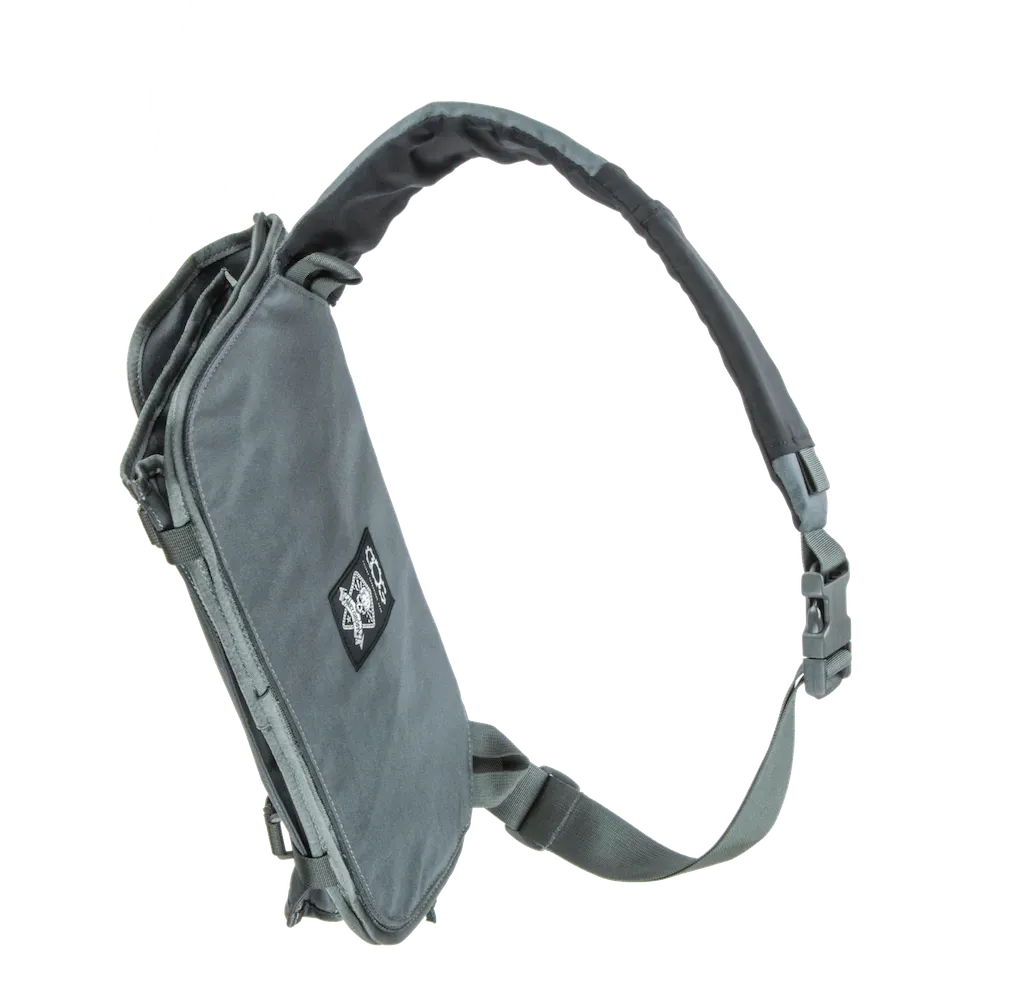
At a glance
- Problem
- I wanted an organized, low-profile way to carry an iPad mini and daily essentials on work trips, and there weren't many good options.
- My role
- Designed the bag from scratch, sewed the prototypes, added a modular panel system, and wrote the spec pack for the manufacturer.
- Result
- PTS produced it through Grey Ghost Gear, and it's sold as the COG Low-Profile EDC Bag in Multicam and Covert Grey.
- Client
- PTS
- Role
- Designer: concept, sketching, patterning, sewn prototypes, and the production spec pack
- Timeframe
- 2013–2014
- Team
- Designed and prototyped solo; Alex and another collaborator suggested changes; Grey Ghost Gear manufactured it
- Disciplines
- Consumer Goods · Cut-n-Sew
- Outcome
- In production and sold by PTS as the COG Low-Profile EDC Bag
- Client
- PTS
- Role
- Designer: concept, sketching, patterning, sewn prototypes, and the production spec pack
- Timeframe
- 2013–2014
More details
- Team
- Designed and prototyped solo; Alex and another collaborator suggested changes; Grey Ghost Gear manufactured it
- Disciplines
- Consumer Goods · Cut-n-Sew
- Outcome
- In production and sold by PTS as the COG Low-Profile EDC Bag
Context
When I traveled for work, I wanted a way to keep my things organized. At the time, there weren’t many good options for carrying my daily essentials. So I started with a list of what I carried on work trips, and designed a bag around it.
Problem
The bag had to carry an iPad mini and a few small items close to the body, organized. I wrote three requirements to guide the design.
- My own carry problem No good low-profile option for an iPad mini and daily essentials.
- A first prototype At a trade show, several people stopped me to ask where I bought it.
- A year of refinement New materials, stitching, patterns, and laminations.
- A product Associates at PTS asked me to design the bag with them for production.
Constraints
- Water resistant.
- Organized, with a place for each item.
- Wear resistant.
- Low profile, sized around an iPad mini.
What I did
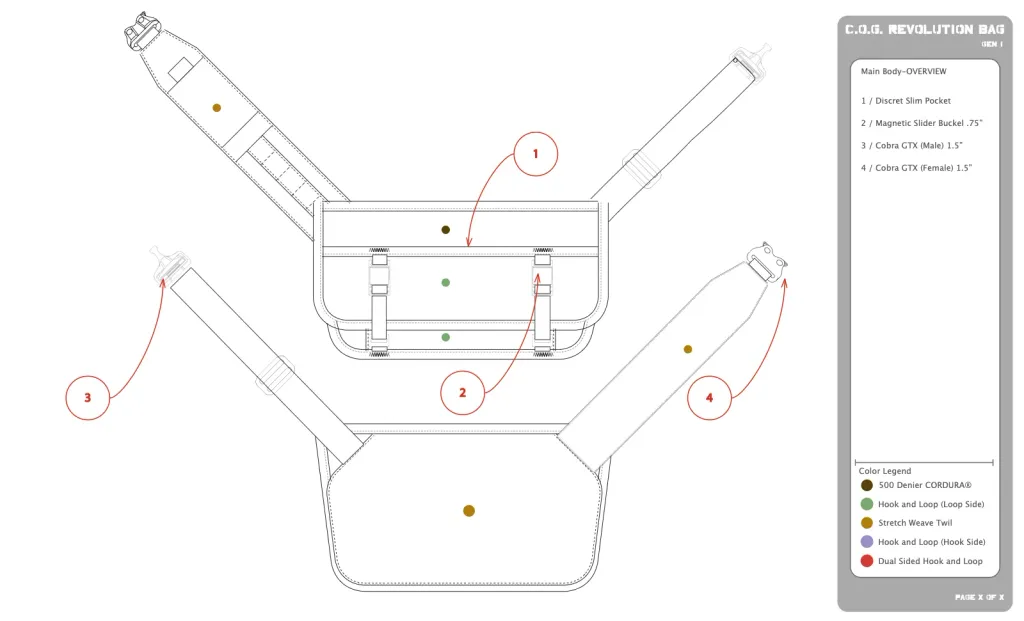
I designed the bag from scratch. I sketched the overall form, then worked out the details: the strap, the pocket layout, and how the fabric, hook and loop layers stack in each seam.
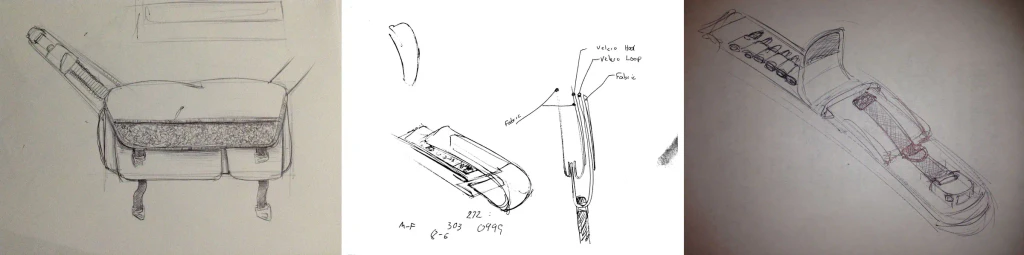
Then I prototyped it, again and again. I made my first prototype to take to a trade show. Walking the show floor, I was stopped by several people asking where I’d bought my bag. That interest pushed me to refine it. For the next year, I experimented with new materials, sewing techniques, and patterns, including heat-sealable fabrics and simple laminations.
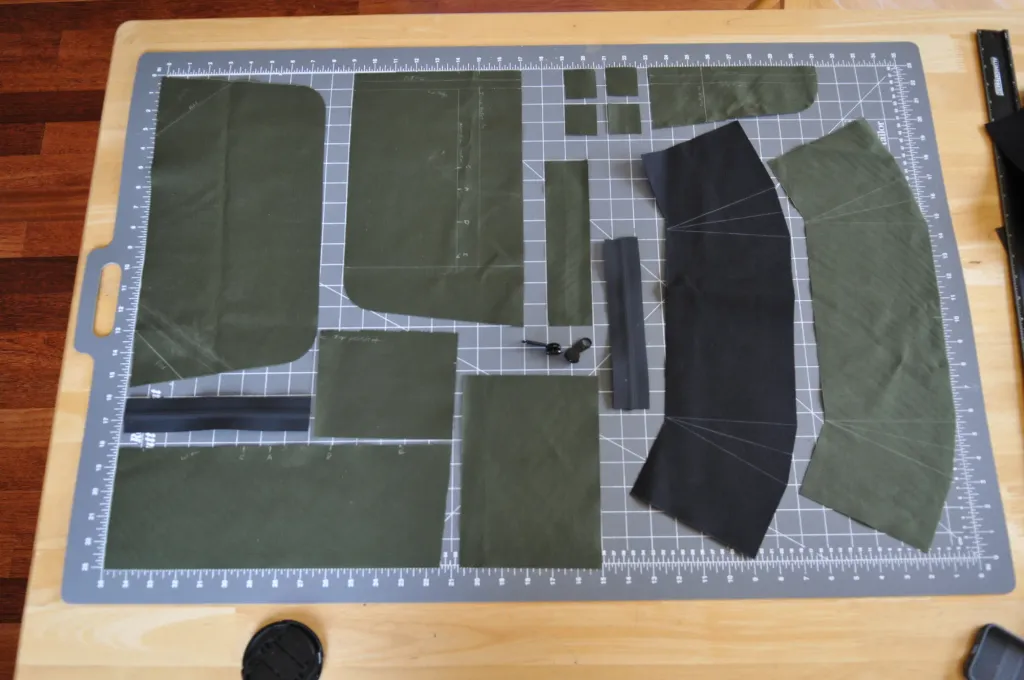
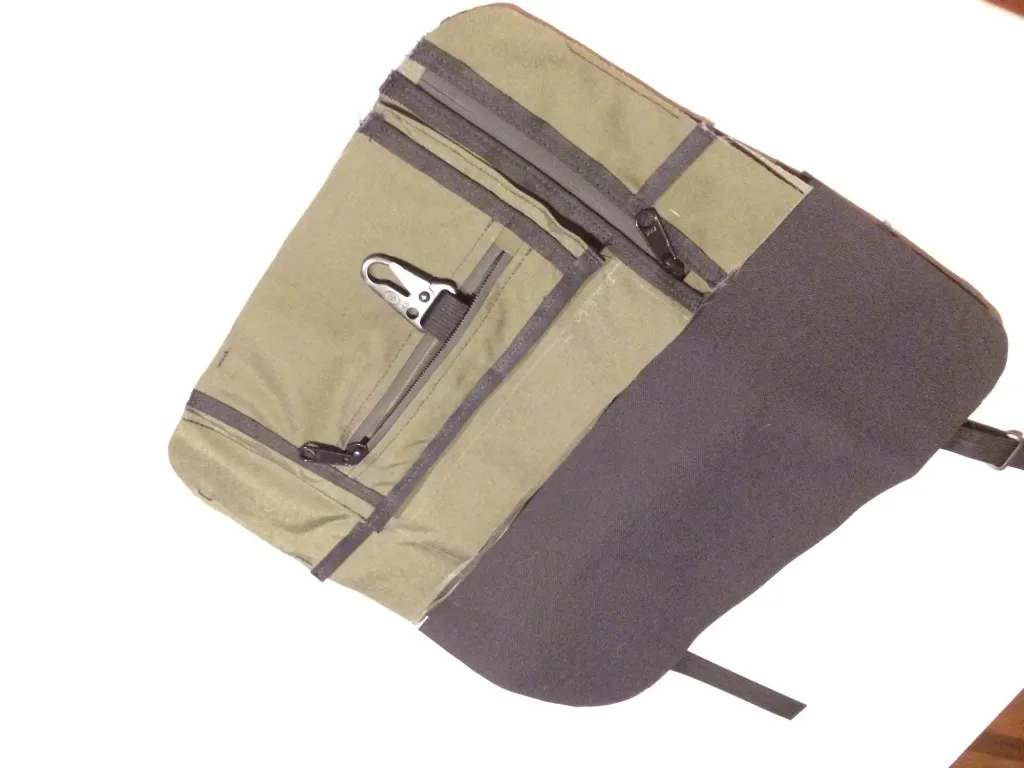
I prototyped on my wife’s hobby sewing machine until the heavy materials nearly destroyed it. Then I bought an industrial machine, which let me make production-quality bags that could be tested. By the time the trade show came around again, the design was solid. A couple of associates from PTS approached me and asked if I’d design a bag with them.
Then I made it modular. The team wanted to add a pistol holster. The sling was never designed to carry a weapon, so instead of reworking the whole bag, I made the panels swappable. Alex and another collaborator suggested changes along the way.
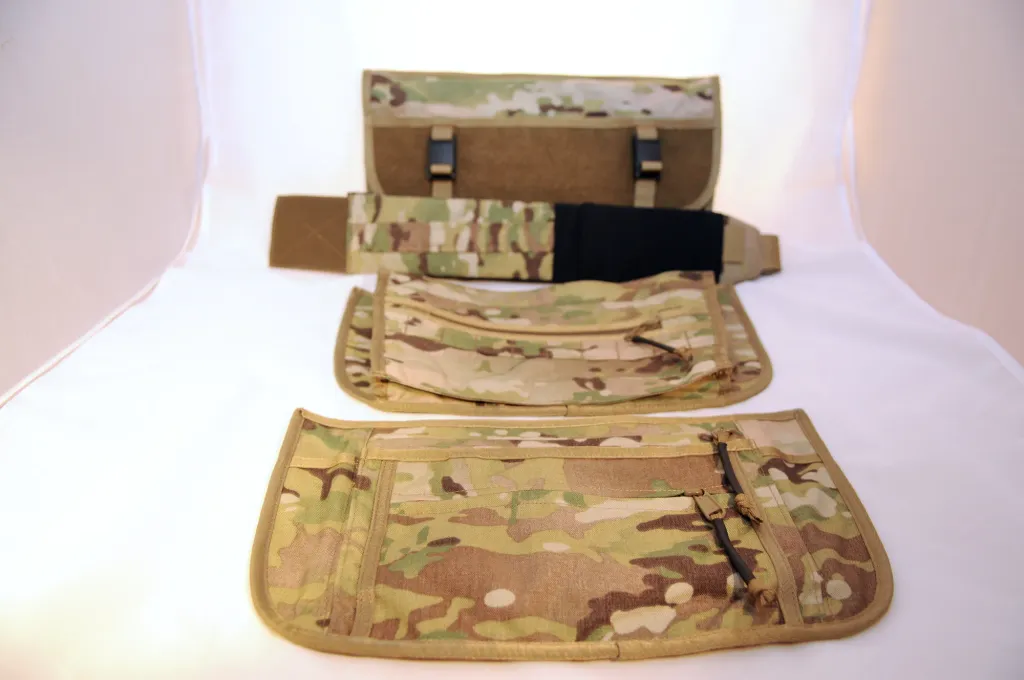
Then I wrote the spec pack. With guidance from friends in the outdoor industry, I documented every panel, pocket, strap and stitch callout for the contract manufacturer, Grey Ghost Gear.
Outcome
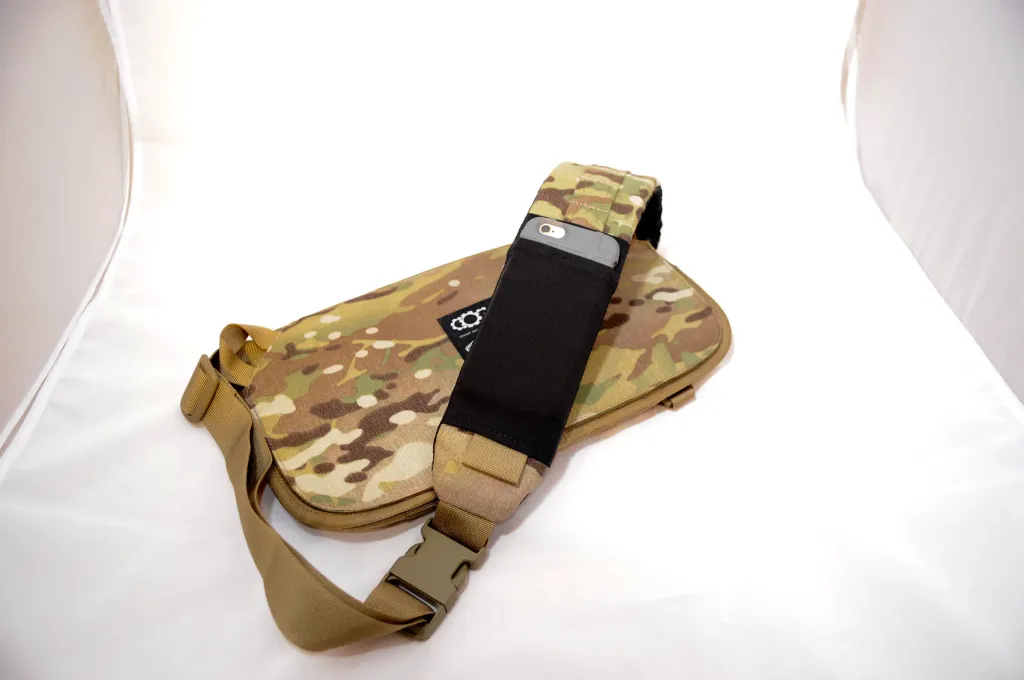
The bag went into production through Grey Ghost Gear. PTS sells it as the Covert Operations Gear (COG) Low-Profile EDC Bag, in Multicam and Covert Grey.
1 year
Review
The project was deceptively complicated and taught me a lot. Sewing quality goods takes deep knowledge of textiles. It started with my wanting what was essentially a purse for work trips, and it ended with a product on the market.