At a glance
- Problem
- Shooters were adding hand stops to rails already fitted with Magpul's XTM covers, and the parts didn't match.
- My role
- Owned the design end to end: sketching, CAD, design for manufacturing, and high-speed impact testing.
- Result
- Launched as the XTM Hand Stop Kit and Enhanced Rail Panels; 7 US design patents; both still in Magpul's line.
- Client
- Magpul Industries
- Role
- Lead industrial designer: concept, CAD, design for manufacturing, and impact testing
- Timeframe
- 2011–2012
- Team
- Ask from business development; production CAD handed off for mold design
- Disciplines
- Defense · Injection Molding · DFM
- Outcome
- 7 US design patents; both products still sold by Magpul
- Client
- Magpul Industries
- Role
- Lead industrial designer: concept, CAD, design for manufacturing, and impact testing
- Timeframe
- 2011–2012
More details
- Team
- Ask from business development; production CAD handed off for mold design
- Disciplines
- Defense · Injection Molding · DFM
- Outcome
- 7 US design patents; both products still sold by Magpul
Context
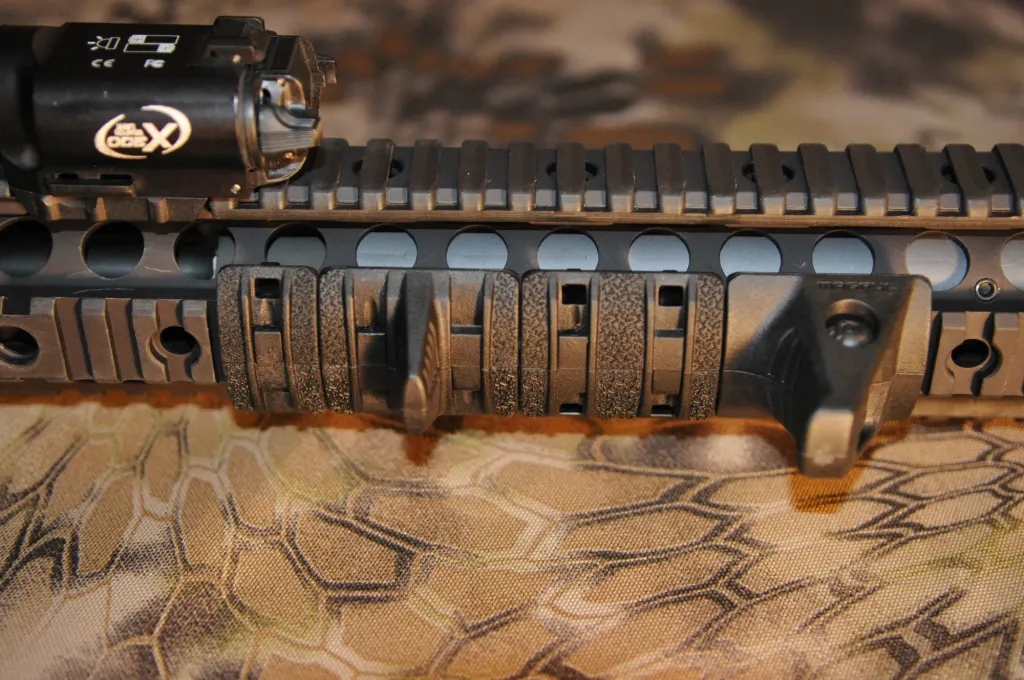
Magpul makes polymer accessories for rifles. Its XTM panels are snap-on covers for the 1913 Picatinny rail, the toothed mounting rail on a rifle’s handguard. The covers protect unused rail and give the support hand something better to hold than bare aluminum teeth.
As an industrial designer at Magpul, I was handed the ask by business development: a modular grip system that people could reach for and configure, and that made the rail comfortable to hold. From there I owned the design end to end, across two products: the XTM Hand Stop Kit and the next-generation XTM Enhanced Rail Panels.
Problem
The parts on the rail came separately, so they behaved separately. Hand stops were catching on, and people bolted them onto rails already wearing XTM covers, but nothing was designed to fit together.
- Bare rail is hard on hands Exposed 1913 teeth are uncomfortable to grip and snag slings and gear.
- Covers fixed comfort XTM panels covered the teeth, but they were only covers.
- Hand stops caught on Shooters added them as travel limiters and as an alternative to angled foregrips.
- The parts didn’t match Hand stops often didn’t line up with the XTM covers next to them.
- A rail that didn’t work as one surface Grip, stop, and cover were three separate purchases that didn’t fit together.
Constraints
- Fit every NATO-spec 1913 rail, even though rails vary in tolerance from maker to maker.
Match the existing XTM panel’s length and width so old and new parts interlock. Weight was capped against the same panel: the hand stop could weigh no more than three panels.
- Mold in glass-filled nylon, with wall thicknesses the material could flow through and fill.
Keep tooling simple: a cavity count and size that gave a reasonable cycle time and output, no cooling fixtures, and as few slides and lifters as possible.
What I did
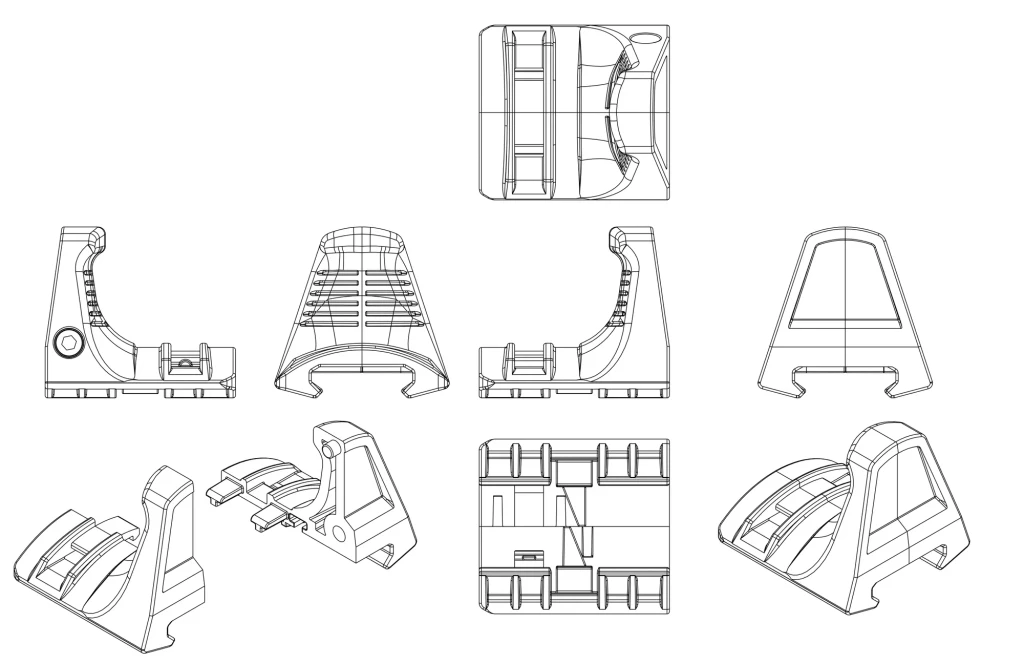
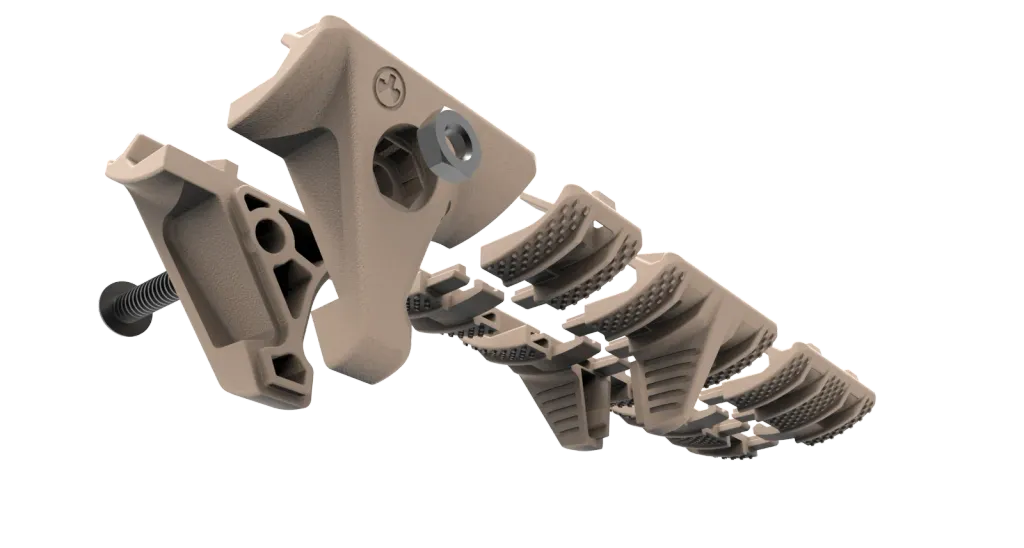
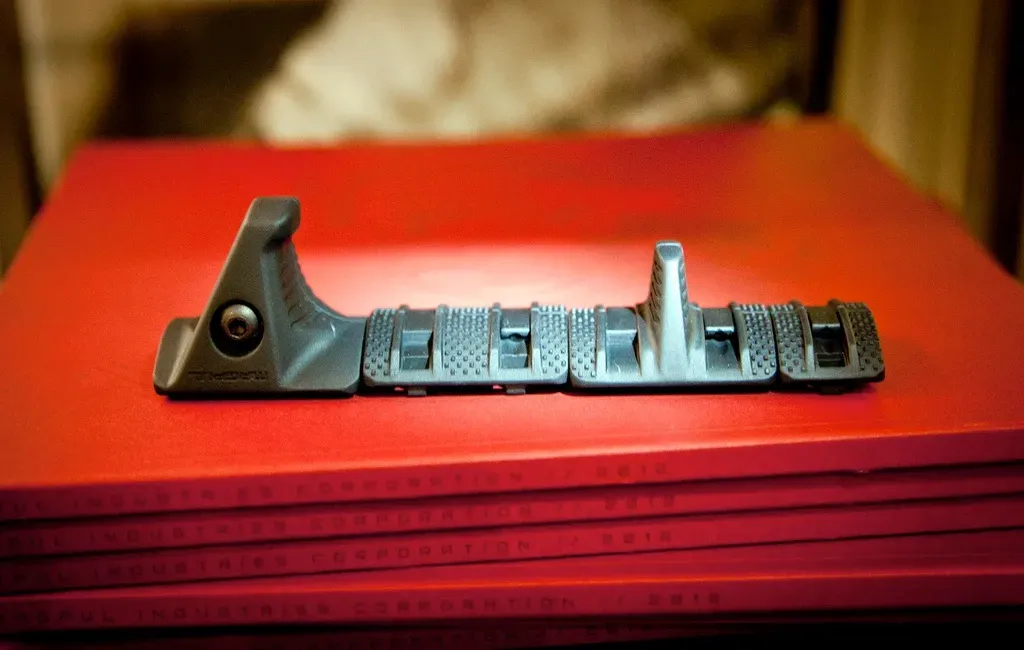
The key move: one interface for every part. The hand stop, a finger index, a half cover, and a full cover all lock to each other with the same interlocking tabs as the XTM panel. Users can arrange grip, index, and cover in any order along the rail, and use half and full covers to set the spacing.

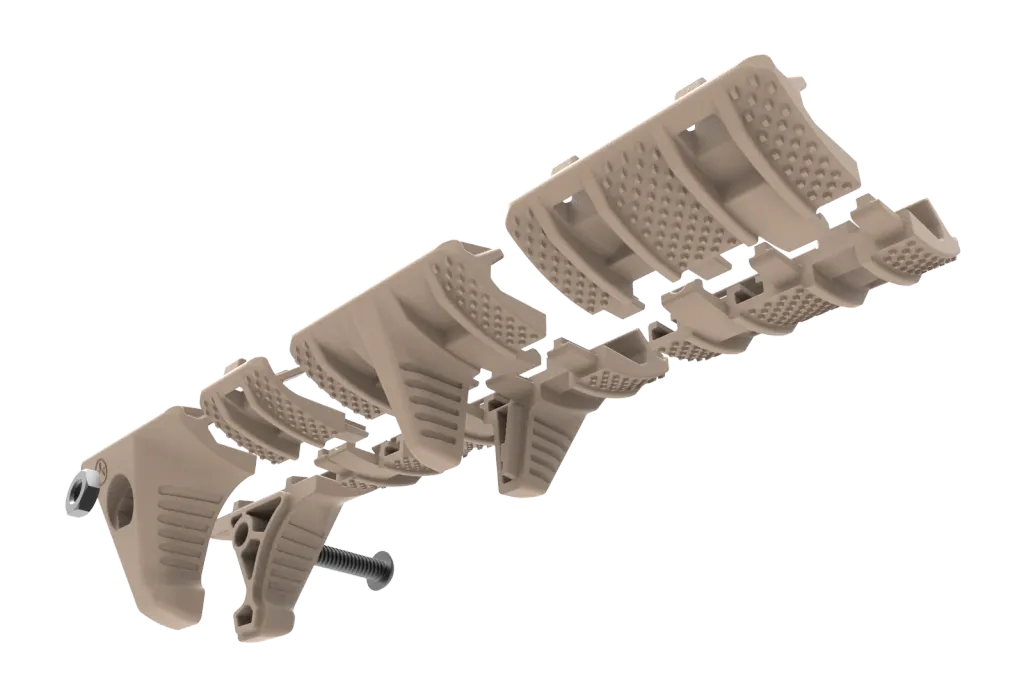
Then I designed the rest of the system around it.
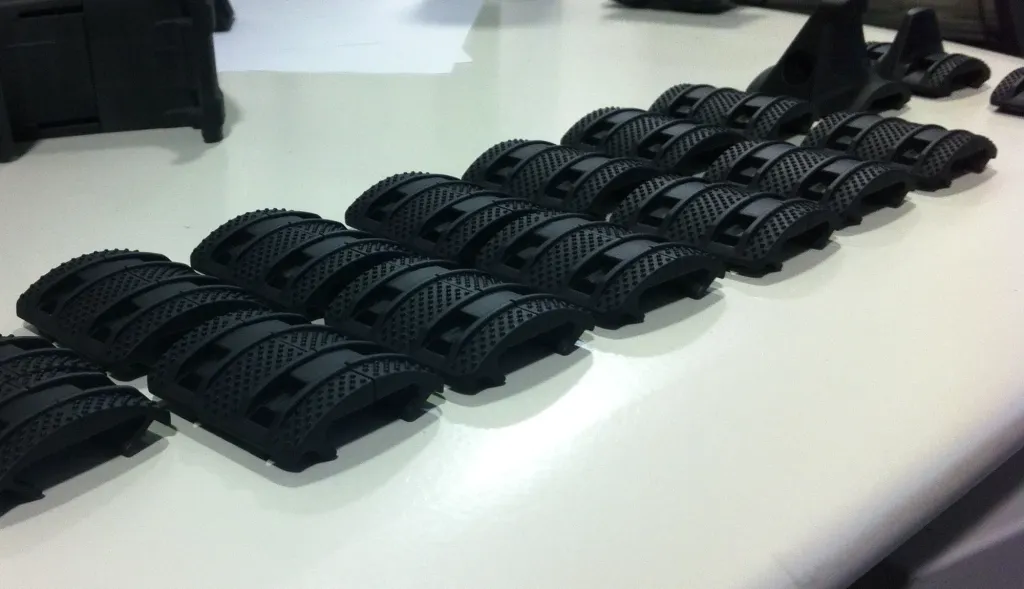
Redesigned the XTM panel as the Enhanced panel, with a more aggressive grip texture and reinforced polymer. It still snaps on around accessories that are already mounted.
Added a clip inside the panel to route weapon-light and laser cables. Separate cable-cover and tape-switch concepts explored the same goal but didn’t go to market.
Iterated the hand stop through more than a dozen CAD revisions, adding cord management underneath, trying different grip textures, and strengthening it against impact.
Designed for manufacturing in glass-filled nylon and handed the production CAD to the mold designers.
Then I tried to break it. I dropped rifle uppers fitted with the hand stop onto a ledge and filmed the impacts with a high-speed camera. The first design failed when the face of the stop took the hit.
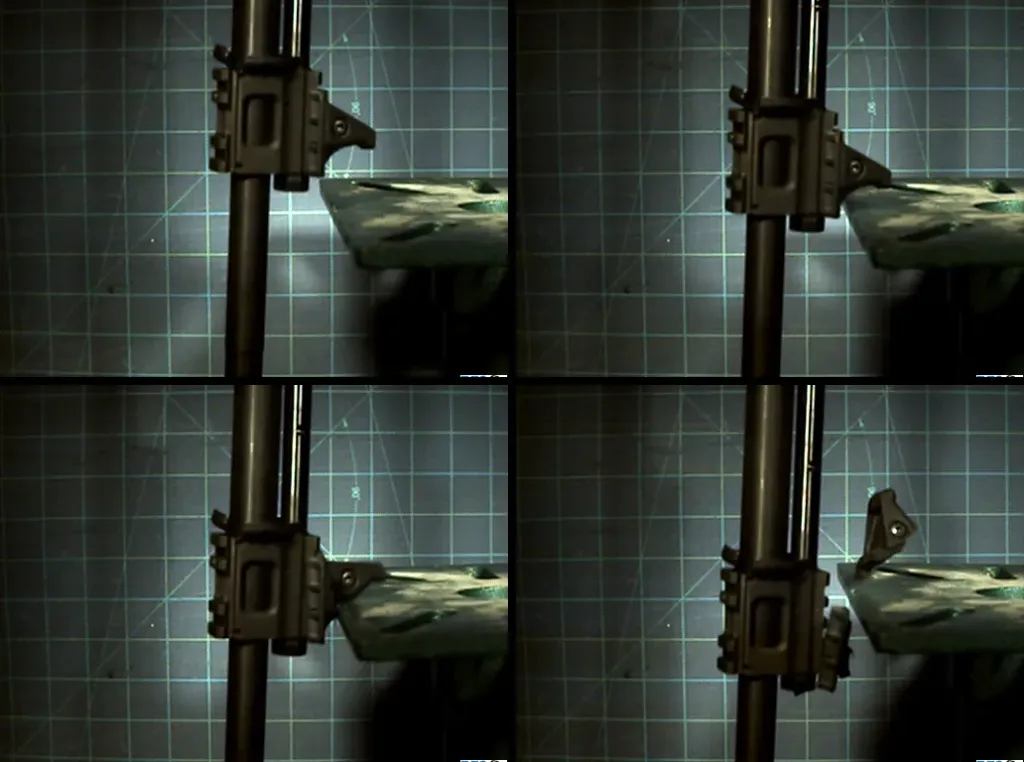
The footage showed the culprits: stress concentrators at the angle points. I removed them and added internal stiffening ribs that absorb most of the shock, so the stop can hit something without breaking.
Outcome
The kit launched while I was at Magpul, and both products are still in the line today: the XTM® Hand Stop Kit (MAG511) and the XTM® Enhanced Rail Panels (MAG510). Both have National Stock Numbers, so they can be ordered through the US military supply system.
7
What I’d do differently
The snap system was secure and very robust, but it was a little hard to use: removing a panel takes the tips of two rifle rounds and some patience. I’d look for a way to keep that strength and make removal much easier.